Jacopo Razzauti

Research

I am a behavioral neuroscientist interested in how the tiny brain of mosquitoes processes sensory stimuli of opposite valence: attractive human cues and aversive insect repellents. My work spans multiple levels of biological organization, from genes and neural activity all the way to individual and collective behavior.

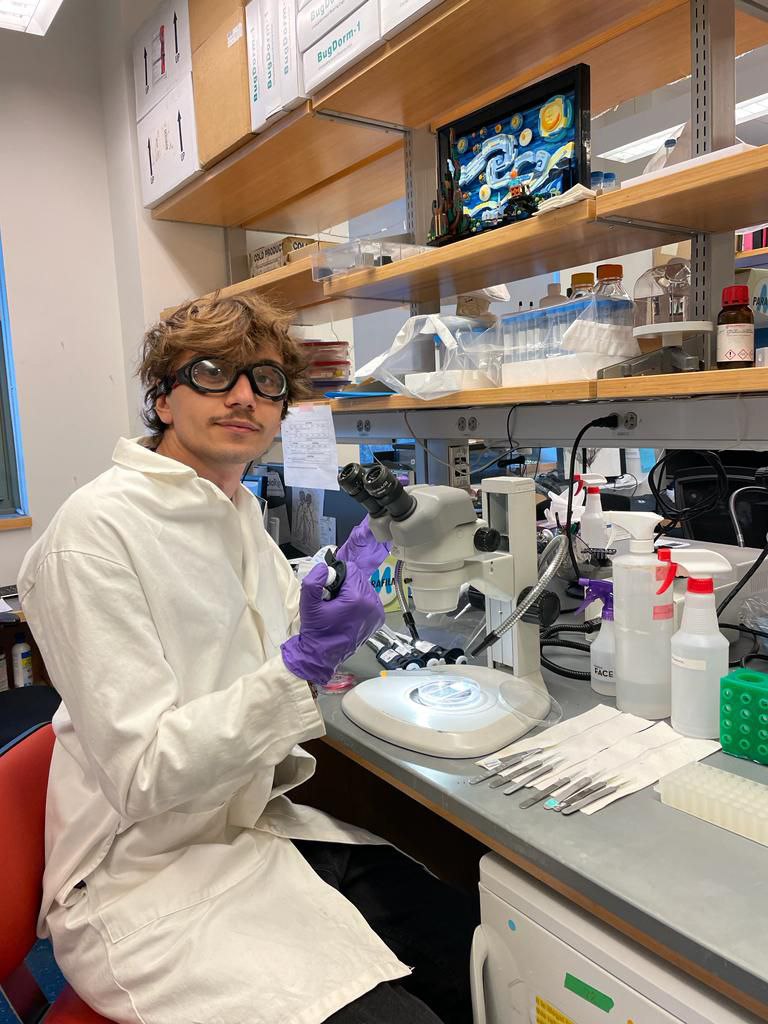
Me at the bench, pretending to know how to pipette
Me pretending to know how to pipette. You can also see some of the Lego sets on my bench.

Project · Mosquito repellency

How do insect repellents work?

A major focus of my PhD is understanding how commercially available insect repellents such as DEET and picaridin repel female Aedes aegypti mosquitoes. I study these compounds at both the behavioural and neuronal levels, combining custom behavioural rigs, high-speed videography, tracking pipelines, and calcium imaging.

1. Behavioural – the mosquito “HOSTel”

To quantitatively study how repellents reshape behaviour, I built a custom behavioural arena that I call the mosquito HOSTel. It allows me to deliver attractive and aversive stimuli with precise spatial and temporal control while tracking up to ~30 mosquitoes at once with dual high-speed cameras (500 fps).

Individual trajectories and poses are extracted using a transformer-based multi-animal tracking pipeline. This lets me dissect how exploration, approaches, landings, probing, and escape responses change as mosquitoes are exposed to different stimulus combinations.

2. Neuronal – calcium imaging in sensory appendages

On the neural side, I perform calcium imaging in the sensory appendages of the mosquito to measure how repellents and attractive cues are encoded at the periphery. Over the years I have used multiple imaging modalities, from two-photon to light-sheet microscopy, to capture fast, spatially structured neuronal dynamics in these appendages.
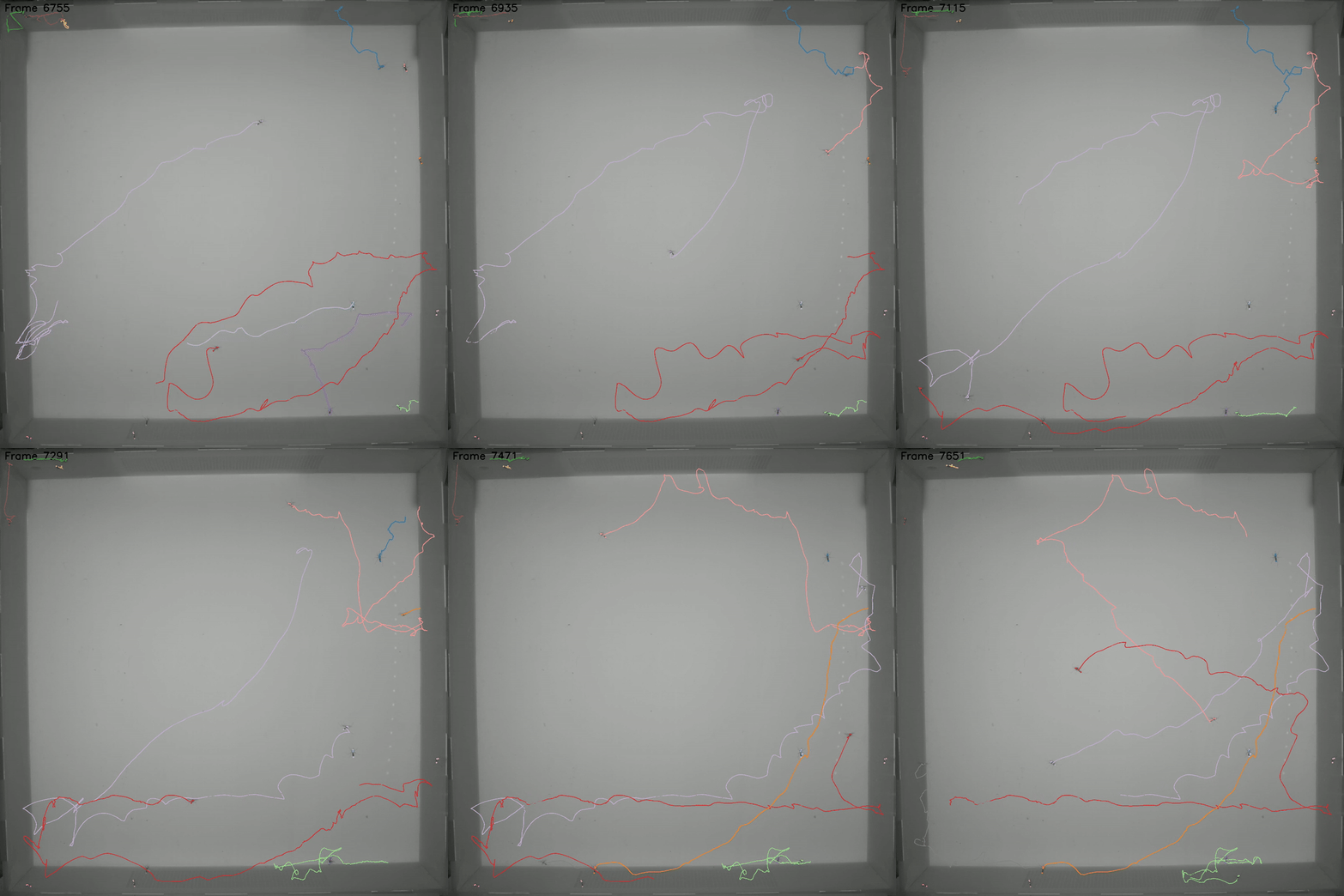
Example video from the HOSTel behavioural chamber
Example of high-speed recordings from the HOSTel behavioural chamber, where individual mosquitoes are tracked and their trajectories quantified.

Tool · FERAL

FERAL: direct video-to-behaviour mapping

I co-develop FERAL (Feature Extraction for Recognition of Animal Locomotion) together with Peter Skovorodnikov. FERAL is a supervised video-understanding toolkit for the direct detection of discrete animal behaviours straight from video, bypassing the need for pose estimation.

Across benchmarks, FERAL outperforms state-of-the-art pose- and video-based models. On a dataset of mouse social interaction, it surpasses Google’s VideoPrism while using only a fraction of the training data. FERAL generalises across species, recording conditions, and levels of organisation: from single-animal locomotion to complex social interactions and emergent collective dynamics.

You can learn more about the project and try it out at www.getferal.ai .

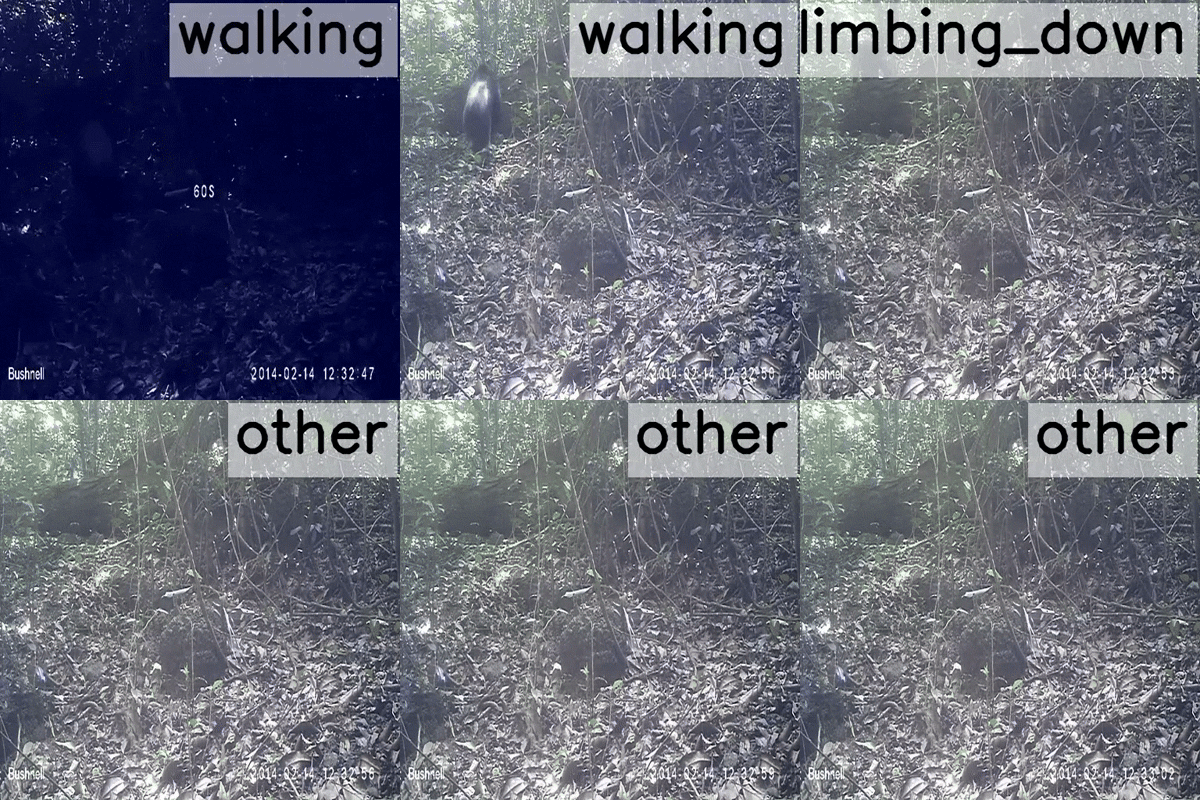
Example of FERAL detecting behaviours in complex scenes
FERAL detects discrete behaviours in complex, naturalistic videos. Here it is applied to a clip from the PanAf20K dataset.

Why this matters for mosquitoes

For mosquito work, FERAL allows us to automatically annotate frame-level behaviours such as approaches, landings, probing, and escape, directly from high-speed video of HOSTel experiments. This makes it possible to compare how repellents, host cues, and genetic perturbations reshape behavioural sequences across thousands of trials and many individuals.

Projects · In progress

Cell types, mating, and sensory coding in mosquitoes

Beyond repellents and FERAL, I am involved in several projects in the Vosshall lab that aim to link molecular identity, neural activity, and behaviour in Aedes aegypti.

Mosquito Cell Atlas

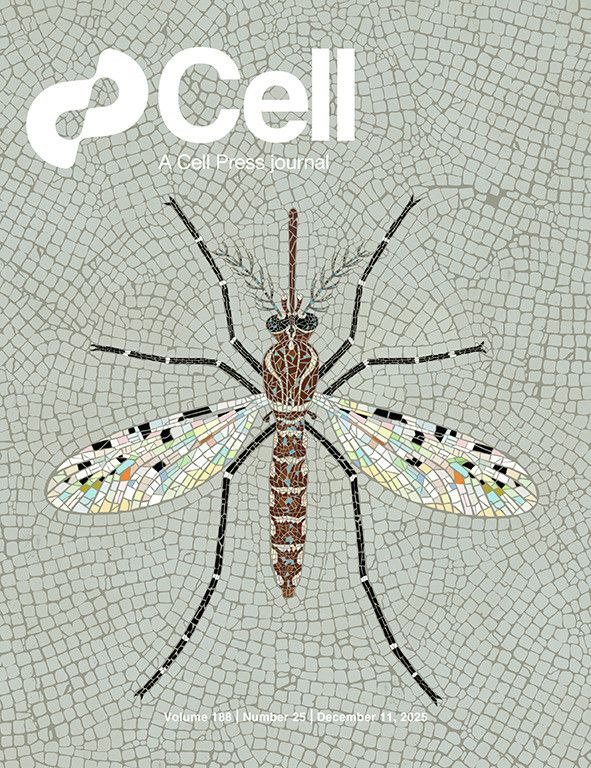
I was part of the consortium that built a single-nucleus transcriptomic atlas of the adult mosquito under the supervision of my amazing colleagues Nadav Shai, Olivia Goldman and Allie DeFoe. This The “Mosquito Cell Atlas” provides a molecular map of sensory, neural, and peripheral cell types, which we use as a framework to interpret behavioral phenotypes and to target specific cell classes in future experiments.

Pic of mosquito mating
The study got on the cover of Cell.

Mating and female choice

I have worked on the project led by Leah Houri-Zeevi studying how female mosquitoes control mating and sperm use over time: how they accept or reject males across various species.

Pic of mosquito mating
This is a pic I took of two mosquitoes mating!